Diagnosing cooling system failures requires a clear understanding of the differences between airflow issues and refrigerant undercharge problems. Both conditions can lead to poor cooling performance, but their causes and solutions vary significantly. Identifying the root cause accurately is essential for effective repair and maintenance.
Airflow problems typically arise from blockages or restrictions within the system’s air path. These can include dirty or clogged air filters, damaged blower motors, obstructed vents, or debris on the evaporator coil. When airflow is limited, cool air cannot circulate properly through the space being conditioned. This results in uneven temperatures and reduced overall efficiency. Additionally, inadequate airflow may cause find out the truth evaporator coil to freeze because insufficient warm air passes over it to maintain proper temperature balance.
On the other hand, refrigerant undercharge refers to an insufficient amount of refrigerant circulating within the cooling system. Refrigerants are responsible for absorbing heat from indoor air and releasing it outside during operation. When there isn’t enough refrigerant due to leaks or improper charging during installation or servicing, the system struggles to remove heat effectively. Symptoms of undercharging usually include longer run times without reaching desired temperatures and a noticeable drop in cooling capacity.
One key diagnostic step is measuring static pressure across different points in the ductwork alongside checking temperature drops at supply registers compared with return vents. Low static pressure often indicates restricted airflow caused by obstructions or mechanical faults such as failing fans or blocked ducts rather than a refrigerant issue. Conversely, if static pressure readings are normal but cooling output remains low along with lower-than-expected suction pressures on gauges connected to service ports, this suggests an undercharged refrigerant condition.
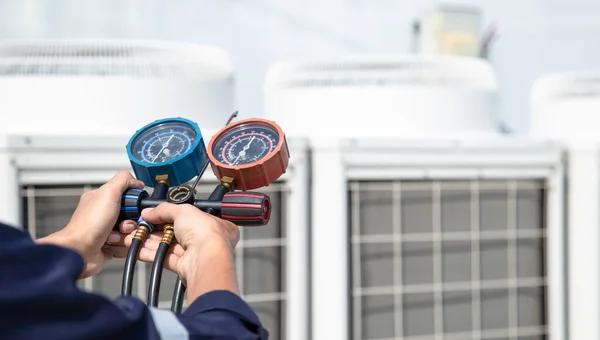
Technicians also rely on visual inspections combined with specialized tools like manifold gauge sets and electronic leak detectors when diagnosing these issues. A frozen evaporator coil might be present in both scenarios; however, its presence alone does not confirm whether airflow problems or low refrigerant levels are responsible since both conditions can contribute to freezing.
Ultimately, distinguishing between airflow deficiencies and refrigerant undercharge involves correlating symptoms with measured data points including temperature differentials across components and pressure readings within refrigeration lines versus duct systems’ performance metrics. Addressing each problem correctly ensures improved energy efficiency while preventing further damage such as compressor failure due to prolonged stress from inadequate operating conditions.
By carefully analyzing these factors together rather than relying on isolated observations technicians can provide accurate diagnoses leading directly toward appropriate repairs that restore optimal function of any cooling system experiencing failure symptoms related either to restricted airflow or insufficient refrigerant charge levels.