Tag: Health

  • Ayurvedic Body Lotion for Winter Skincare: Benefits and Tips

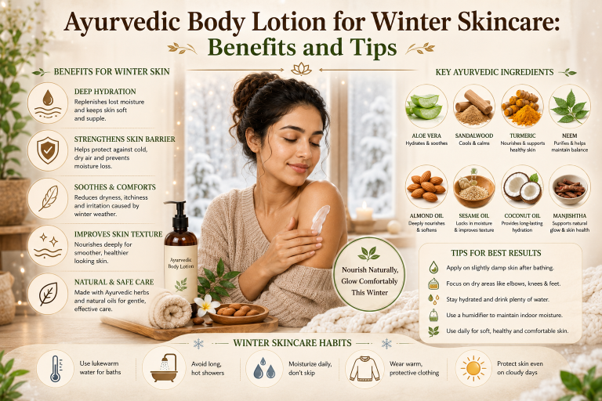
    Ayurvedic Body Lotion for Winter Skincare: Benefits and Tips

    Winter can be particularly challenging for the skin. Cold temperatures, low humidity, indoor heating, and harsh winds often strip the skin of its natural moisture, leading to dryness, roughness, itching, and discomfort. During this season, maintaining proper hydration becomes essential for preserving healthy, soft, and resilient skin.

    An Ayurvedic body lotion can be an excellent addition to a winter skincare routine because traditional Ayurvedic formulations often focus on deep nourishment, moisture retention, and supporting the skin’s natural balance. These products typically incorporate botanical ingredients and natural oils that help protect the skin from seasonal dryness.

    Many people who search for the best face moisturizer for dry skin in India also look for equally effective body care solutions during winter. While facial skincare often receives more attention, the skin on the rest of the body requires consistent hydration and protection as well.

    How Winter Affects the Skin

    During winter, environmental conditions can significantly impact skin health.

    Common winter-related skin concerns include:

    • Dryness
    • Flakiness
    • Tightness
    • Rough texture
    • Itching
    • Increased sensitivity

    Cold air contains less moisture, while indoor heating systems further reduce humidity levels. Together, these factors can weaken the skin’s protective barrier and increase moisture loss.

    When the skin becomes dehydrated, it often feels uncomfortable and may appear dull or uneven.

    Providing adequate hydration and barrier support is one of the most important aspects of winter skincare.

    The Ayurvedic Approach to Skin Hydration

    Ayurveda emphasizes maintaining balance and supporting the body’s natural functions through nourishing ingredients and consistent self-care practices.

    In winter, Ayurvedic skincare often focuses on:

    • Deep hydration
    • Skin nourishment
    • Protection from environmental stress
    • Supporting the skin barrier

    Traditional formulations frequently include natural oils, herbal extracts, and moisturizing ingredients that help replenish lost moisture.

    Rather than offering temporary relief, Ayurvedic skincare aims to support long-term skin health through regular care and balanced routines.

    This holistic philosophy continues to appeal to individuals seeking natural skincare solutions.

    Benefits of Using Ayurvedic Body Lotion in Winter

    A well-formulated Ayurvedic lotion can offer several advantages during colder months.

    Potential benefits include:

    • Improved hydration
    • Enhanced skin softness
    • Better moisture retention
    • Support for the skin barrier
    • Increased comfort

    Regular application helps replenish moisture that may be lost due to environmental exposure.

    Well-hydrated skin often feels smoother and appears healthier.

    Consistent use can also help reduce the discomfort commonly associated with winter dryness.

    These benefits make body lotion an important part of seasonal skincare routines.

    Common Herbal Ingredients Found in Ayurvedic Body Lotions

    Many Ayurvedic formulations contain ingredients traditionally valued for their nourishing and soothing properties.

    Popular ingredients may include:

    • Aloe vera
    • Sandalwood
    • Turmeric
    • Neem
    • Almond oil
    • Sesame oil
    • Coconut oil

    Each ingredient contributes unique characteristics that help support skin hydration and comfort.

    For example, plant oils often provide rich moisture, while herbal extracts may contribute soothing and conditioning benefits.

    The combination of herbs and natural oils helps create formulations well suited to winter skincare needs.

    Understanding ingredient profiles can help consumers choose products that align with their skin requirements.

    Supporting the Skin Barrier During Winter

    The skin barrier plays a vital role in maintaining hydration and protecting against environmental stressors.

    When the barrier becomes compromised, the skin may experience:

    • Dryness
    • Irritation
    • Roughness
    • Increased sensitivity

    Moisturizing regularly helps support barrier function by reducing moisture loss and reinforcing the skin’s protective capabilities.

    A healthy barrier contributes to:

    • Better hydration
    • Improved resilience
    • Greater comfort
    • Smoother texture

    Barrier support should be a central focus of any winter skincare strategy.

    Consistent hydration is one of the most effective ways to maintain barrier health.

    When to Apply Body Lotion for Maximum Benefits

    Timing can significantly influence the effectiveness of a body lotion.

    The ideal time to apply moisturizer is shortly after bathing, when the skin is still slightly damp.

    This helps:

    • Lock in moisture
    • Improve hydration retention
    • Enhance product absorption

    Additional applications may be beneficial for particularly dry areas such as:

    • Elbows
    • Knees
    • Hands
    • Feet

    Applying lotion consistently rather than only when dryness becomes noticeable helps maintain healthier skin throughout the season.

    Small daily habits often produce the most meaningful long-term results.

    Winter Skincare Tips for Better Hydration

    In addition to using a quality body lotion, several habits can help support skin health during winter.

    Consider the following practices:

    • Use lukewarm rather than very hot water
    • Limit lengthy showers
    • Stay hydrated throughout the day
    • Use a humidifier if indoor air is very dry
    • Wear protective clothing outdoors

    These measures help reduce moisture loss and support the effectiveness of your skincare routine.

    Combining proper skincare with healthy environmental habits often yields the best results.

    Winter skin care is most effective when approached comprehensively.

    Choosing the Right Body Lotion for Your Skin Type

    Different skin types may require different levels of hydration and nourishment.

    When selecting a winter body lotion, consider factors such as:

    • Dryness severity
    • Skin sensitivity
    • Texture preference
    • Climate conditions

    Individuals with very dry skin may benefit from richer formulations, while those with normal skin may prefer lighter options that still provide adequate moisture. Reading ingredient labels and understanding your skin’s needs can help guide product selection.

    A suitable product should feel comfortable while providing long-lasting hydration. Consistency is often more important than using overly complicated products.

    Common Mistakes to Avoid

    Several common habits can reduce the effectiveness of winter skincare.

    Avoid:

    • Skipping moisturizer after bathing
    • Using excessively hot water
    • Ignoring body skincare while focusing only on the face
    • Waiting until skin becomes severely dry
    • Frequently switching products

    Maintaining a simple and consistent routine generally produces better results than using multiple products sporadically.

    Preventive care is often more effective than attempting to correct severe dryness later.

    Healthy skin benefits from regular attention and maintenance.

    Why Natural Skincare Is Popular During Winter

    Many consumers are increasingly drawn to natural skincare products during colder months.

    Reasons for this growing interest include:

    • Preference for plant-based ingredients
    • Desire for gentle formulations
    • Interest in traditional wellness practices
    • Focus on long-term skin health

    Ayurvedic skincare aligns well with these preferences by emphasizing nourishment, hydration, and balance.

    Traditional ingredients continue to attract attention because they address fundamental skincare needs while supporting overall skin comfort.

    This combination of tradition and practicality contributes to their enduring appeal.

    Conclusion

    Winter can place significant stress on the skin, making hydration and barrier protection essential. Ayurvedic lotions offer a natural and effective way to support skin health during colder months through nourishing ingredients, traditional herbal formulations, and long-lasting moisture.

    By helping maintain hydration, improving skin softness, and supporting the skin’s protective barrier, these lotions can play an important role in a comprehensive winter skincare routine. Combined with healthy habits such as proper hydration, gentle cleansing, and timely moisturizer application, they can help minimize dryness and discomfort throughout the season.

    With consistent use and thoughtful skincare practices, it is possible to maintain soft, comfortable, and healthy-looking skin even during the harshest winter conditions.

  • Ghee-Infused Ayurvedic Creams for Skin Whitening: Are They Effective?

    Ghee-Infused Ayurvedic Creams for Skin Whitening: Are They Effective?

    As consumers increasingly seek natural alternatives to conventional skincare products, Ayurvedic beauty formulations have gained significant attention. Traditional ingredients that have been used for centuries are now being incorporated into modern skincare routines, with many people looking for gentle ways to improve skin texture, hydration, and overall appearance.

    One of the most popular Ayurvedic preparations is the 100 times washed ghee cream, a unique formulation created through a traditional process that transforms pure ghee into a smooth, cooling, and easily absorbable cream. This preparation has become widely recognized for its nourishing and skin-conditioning properties.

    Many consumers also explore products marketed as a ghee moisturizer for skin whitening, hoping to achieve a brighter and more radiant complexion through natural skincare methods. However, understanding what these products can realistically do is important before incorporating them into a skincare routine.

    What Are Ghee-Infused Ayurvedic Creams?

    Ghee-infused Ayurvedic creams are skincare products that use clarified butter, or ghee, as a primary nourishing ingredient.

    In Ayurveda, ghee is valued for its:

    • Moisturizing properties
    • Cooling nature
    • Skin-nourishing qualities
    • Ability to support skin comfort
    • Compatibility with various herbal formulations

    Some creams combine ghee with botanical ingredients traditionally associated with skin care and complexion enhancement. The goal of these formulations is often to support healthy, balanced skin while helping improve texture, softness, and hydration.

    What Does “Skin Whitening” Really Mean?

    The term “skin whitening” can sometimes be misleading.

    From a skincare perspective, most topical products do not permanently alter a person’s natural skin tone. Instead, they may help improve the appearance of:

    • Dullness
    • Uneven skin tone
    • Dryness
    • Surface pigmentation
    • Sun-related discoloration

    As a result, the skin may appear brighter, smoother, and more radiant.

    Many consumers who seek whitening products are actually looking for a more even complexion rather than a dramatic change in natural skin color.Healthy skin that is properly hydrated and protected often appears naturally luminous and refreshed.

    How Ghee Supports Skin Health

    One reason ghee-based creams are widely used in Ayurvedic skincare is their ability to support overall skin health.

    Ghee functions primarily as a nourishing moisturizer that helps maintain hydration and strengthen the skin barrier.

    Benefits may include:

    • Improved moisture retention
    • Enhanced skin softness
    • Better skin comfort
    • Reduced dryness
    • Smoother texture

    When the skin is adequately hydrated, it often reflects light more evenly, contributing to a brighter and healthier appearance. This indirect effect can make the complexion look more radiant even though the product is not actively altering skin pigmentation.

    Healthy, moisturized skin generally appears more vibrant than skin that is dehydrated or stressed.

    The Ayurvedic Perspective on Radiant Skin

    Ayurveda approaches skincare differently from many modern cosmetic systems. Rather than focusing solely on changing appearance, Ayurveda emphasizes maintaining balance and supporting the body’s natural functions.

    According to Ayurvedic principles, healthy skin reflects internal harmony and proper nourishment.

    Traditional Ayurvedic skincare aims to:

    • Support skin balance
    • Maintain hydration
    • Protect the skin barrier
    • Promote overall wellbeing
    • Encourage natural radiance

    Ghee is considered beneficial because it nourishes the skin while helping maintain comfort and balance. The Ayurvedic concept of radiant skin is often associated with healthy, well-cared-for skin rather than artificially lightened skin.

    Can Ghee-Based Creams Improve Skin Brightness?

    While ghee itself is not typically considered a direct skin-lightening ingredient, it may contribute to a brighter-looking complexion through several mechanisms.

    These include:

    • Improving hydration
    • Supporting skin barrier health
    • Enhancing smoothness
    • Reducing roughness
    • Promoting a healthy appearance

    When skin is properly moisturized, it often appears more even and refreshed. A person experiencing dryness or dullness may notice that consistent moisturization improves the overall appearance of their complexion over time.

    In this sense, ghee-infused creams may support skin brightness indirectly by creating conditions that allow the skin to look healthier and more radiant. However, expectations should remain realistic regarding the extent of visible changes.

    The Role of Additional Ayurvedic Ingredients

    Many Ayurvedic creams combine ghee with other traditional botanical ingredients.

    Depending on the formulation, these ingredients may be selected to support:

    • Complexion enhancement
    • Skin nourishment
    • Hydration
    • Antioxidant protection
    • Skin comfort

    Examples often found in Ayurvedic skincare products include herbal extracts and plant-based ingredients known for their traditional skincare uses. The effectiveness of a product depends not only on the presence of ghee but also on the quality and combination of these supporting ingredients.

    A well-formulated product may offer broader skincare benefits than a single-ingredient preparation. Consumers should carefully review ingredient lists and product claims before making purchasing decisions.

    Benefits Beyond Complexion Enhancement

    One reason ghee-infused Ayurvedic creams remain popular is that they provide benefits beyond concerns about skin brightness.

    Users often appreciate their ability to:

    • Maintain hydration
    • Support skin comfort
    • Improve softness
    • Enhance smoothness
    • Promote a healthy-looking glow

    These benefits can contribute significantly to overall skin appearance and satisfaction. Many individuals find that improving skin health naturally enhances their complexion without the need for aggressive treatments.

    A skincare routine focused on nourishment and protection often produces more sustainable results over time. Healthy skin tends to appear naturally vibrant regardless of skin tone.

    Building a Realistic Skincare Routine

    Consumers seeking brighter skin should view ghee-based creams as one component of a comprehensive skincare routine.

    Important practices include:

    • Daily cleansing
    • Consistent moisturization
    • Sunscreen use
    • Adequate hydration
    • Healthy lifestyle habits

    Sun protection is especially important because ultraviolet exposure can contribute to uneven pigmentation and dullness. Even the most effective moisturizer cannot compensate for inadequate sun protection.

    Combining nourishing skincare with healthy habits often provides the best long-term results. Consistency is generally more important than expecting dramatic overnight changes.

    Are Ghee-Infused Ayurvedic Creams Effective?

    The answer depends on the desired outcome.

    If the goal is healthy, hydrated, comfortable, and radiant-looking skin, ghee-infused Ayurvedic creams can be a valuable addition to a skincare routine.

    Their strengths typically include:

    • Deep nourishment
    • Moisture support
    • Barrier protection
    • Improved skin comfort
    • Enhanced overall appearance

    However, they should not be viewed as products that dramatically or permanently alter natural skin tone. Their effectiveness is best understood in terms of supporting skin health, which may naturally contribute to a brighter and more even-looking complexion.

    Conclusion

    Ghee-infused Ayurvedic creams have earned a respected place in traditional skincare because of their nourishing, moisturizing, and skin-supportive properties. While they are not typically designed to permanently change natural skin tone, they can help improve hydration, support the skin barrier, enhance softness, and promote a healthy, radiant appearance.

    From an Ayurvedic perspective, beautiful skin is closely linked to balance, nourishment, and overall wellbeing. Ghee plays an important role in this philosophy by helping maintain skin comfort and vitality. Modern users often appreciate these benefits as part of a holistic approach to skincare.

    For individuals seeking brighter-looking skin, ghee-based Ayurvedic creams may contribute to improved radiance by supporting overall skin health. When combined with consistent skincare practices and sun protection, they can become a valuable part of a routine focused on achieving healthy, naturally glowing skin.

  • Small Habits, Big Health How Tiny Changes Transform Your Life

    Small Habits, Big Health How Tiny Changes Transform Your Life

    In the pursuit of a healthier lifestyle, many people often feel overwhelmed by the prospect of making significant changes. However, it’s important to recognize that transformation doesn’t always require drastic measures. Small habits, when consistently practiced, can lead to substantial improvements in overall health and well-being.

    The concept of small habits revolves around making minor adjustments to daily routines that are easy to implement and maintain. These tiny changes may seem insignificant at first glance, but their cumulative effect over time can be profound. For instance, consider the habit of drinking an extra glass of water each day. This simple action helps keep the body hydrated, supports digestion, and promotes clearer skin. Over weeks and months, this small habit contributes significantly to better health.

    Another example is incorporating short bursts of physical activity into your daily schedule. Instead of committing to long hours at the gym—which might be daunting for many—aim for brief sessions throughout the day. Taking a brisk 10-minute walk during lunch breaks or opting for stairs instead of elevators are manageable tasks that enhance cardiovascular fitness and boost energy levels without requiring major time investments.

    Mindfulness practices also exemplify how small habits can transform mental health. Setting aside just five minutes a day for meditation or deep breathing exercises can reduce stress levels significantly over time. These practices increase awareness and help individuals respond more calmly to life’s challenges.

    Nutrition is another area where small habits make a big difference. Rather than overhauling your entire diet overnight, start with simple swaps like choosing whole grains over refined ones or adding an extra serving of vegetables to meals. Gradually replacing sugary drinks with herbal teas or water infused with fruits not only cuts down on unnecessary calories but also introduces essential nutrients into your diet.

    Sleep hygiene is crucial as well; establishing a consistent bedtime routine ensures adequate rest which is vital for both physical recovery and mental clarity. Simple actions such as dimming lights an hour before bed or avoiding screens can improve sleep quality immensely.

    Moreover, cultivating gratitude through journaling has shown remarkable effects on emotional well-being by shifting focus from negative thoughts towards positive aspects of life.

    Consistency is key when it comes to these small habits; they must become integral parts of daily routines rather than sporadic attempts at change. The beauty lies in their simplicity—they require minimal effort yet yield maximum benefits when practiced regularly.

    In conclusion, embracing minor modifications in everyday activities holds immense potential for enhancing overall health outcomes gradually yet effectively—a testament indeed that sometimes less truly means more!